Alcohol
Social Drinking on a Budget: 5 Step Guide 2026
You sit at the bar, laughing on cue, but your brain is quietly doing math on every sip. Pretending Drinks Out Are Fun When You’re Anxious About Money is exhausting, especially when friends seem relaxed and happy to spend. You are not the only one wondering how the night got so expensive and why your chest feels tight instead of carefree.
Money stress and alcohol culture collide hard in your 20s and 30s. Rent, loans, low starting salaries, and “treat yourself” cocktails can pull you into rounds, shots, and money worries and mental health feed each other, and alcohol often becomes part of that spiral.
This guide names what is really going on, emotionally and financially, then gives you options. You will get language to talk about your budget, strategies for social drinking on a budget, low-cost alternatives to bar nights, and a simple plan to reset your habits without blowing up your social life.
Table of Contents
- When Drinks Out Feel Performed
- Money Anxiety Meets Drinking Culture
- Are You Drinking To Cope With Money Stress?
- Talking About Money Without Humiliation
- Social Drinking On a Budget When You Do Go
- Low-Cost, Low-Alcohol Ways To See Friends
- Quick Phrases and Small Strategies
- A 5-Step Reset Plan
- When Friends Do Not Get It
- When Alcohol Feels Like More Than a Money Issue
- Frequently askedquestions.
- You Are Not Alone in Rethinking This
- Sources
Key Takeaways
- You are not alone in feeling money anxiety and alcohol pressure at the same time.
- Social drinking on a budget is doable with limits, scripts, and quieter choices around rounds and refills.
- Low-cost, low-alcohol hangouts can actually deepen friendships and reduce next-day shame.
- A 5-step reset helps you review spending, set boundaries, and test new habits.
- If financial stress and drinking feel out of control, professional or peer support is worth exploring.

That moment when the cocktails look fun, everyone is laughing, and you’re silently calculating how much the night is really costing you.
Night Performance
When Drinks Out Feel Performed
When you are anxious about money, social drinking can feel like acting in an expensive play. You smile, clink glasses, and join the “cheers,” while a quieter part of you thinks about rent, overdrafts, or that credit card minimum. Drinking culture expects you to look carefree exactly when you feel anything but.
A lot of people silently carry that tension. Everyday Health data, notes that only about 54% of U.S. Adults now drink alcohol, the lowest level in decades.[1] More people are stepping back from heavy drinking and questioning whether standard bar nights are actually fun, especially when budgets are tight.
The pretending often goes beyond alcohol itself. You might pretend you are fine with pricier venues, pretend you can afford another round, or pretend you do not care your bank app is glowing red. That performance is draining. Naming that pressure is the first step in building social drinking on a budget that fits your real life.
Hidden Collision
Money Anxiety Meets Drinking Culture
Money anxiety and alcohol feed on each other. Mind describes how worrying about bills, debt, or unstable income can spike anxiety and low mood. Healthline explains that alcohol changes brain chemicals linked to mood and sleep, which can make anxiety worse in the hours and days after drinking.[2] That “hangxiety” is not just in your head.
At the same time, social drinking expectations are high. You get invites to birthday cocktails, bottomless brunch, rooftop bars, and farewell drinks. Saying no can feel like saying you are no fun or “too serious about money.” So you keep going, even when you cannot afford to go out with friends at that level.
Economic pressure adds another twist. The Institute of Alcohol Studies has reported that during economic crises, overall alcohol use can fall while heavy episodic drinking rises in stressed groups. That fits the pattern of “I do not go out as often, but when I do, I go hard,” which often clashes with social drinking on a budget.
The result is a double hit: high financial stress and heavier nights out when you finally say yes. Both increase anxiety. Understanding that pattern helps you design nights that are still social, but kinder to your wallet and your nervous system.
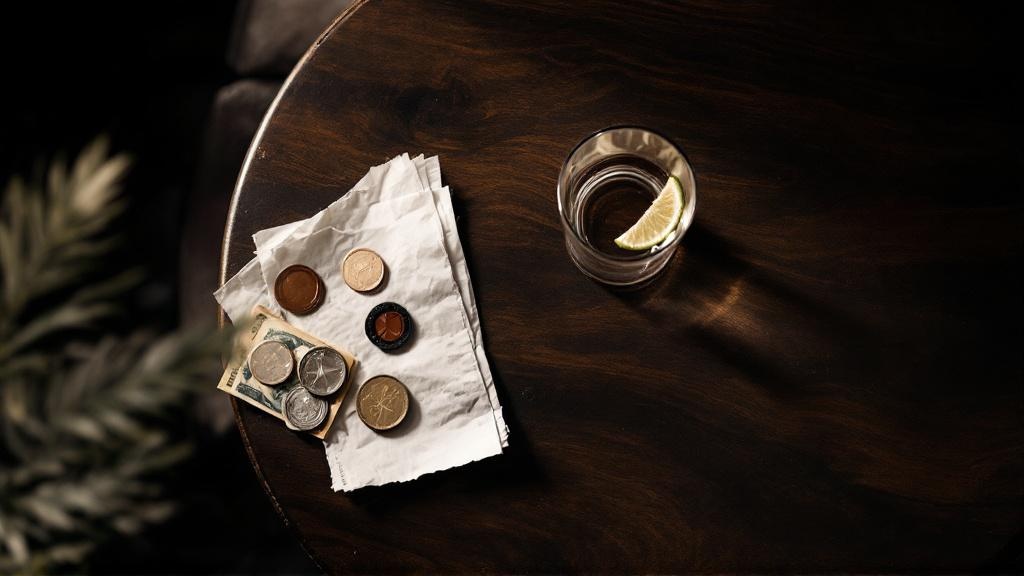
The morning-after reality: a quiet table, crumpled receipt, and scattered cash telling a different story than last night’s jokes.
Gentle Check
Are You Drinking To Cope With Money Stress?
This is not about labeling yourself or diagnosing anything. It is about curiosity. Ask yourself a few quiet questions about money anxiety and alcohol:
- Do you drink more on weeks when you feel most stressed about bills or debt?
- Do you say yes to expensive bar nights mainly because you are scared of missing out or being judged?
- Do you order extra drinks to feel less ashamed about having less money than friends?
- Do you often wake up after nights out feeling panicked about spending, but unsure how it added up?
Healthline points out that using alcohol to manage anxiety can increase the risk of longer-term problems, because it temporarily numbs stress without changing anything underneath. Financial strain is linked to risky drinking patterns, especially binge-style nights.
If some of those questions land, you are not broken. You are a person who found a very common coping strategy for financial stress. The good news is that social drinking on a budget is not only possible, it can actually reduce both money anxiety and that gnawing sense of regret after a big night.
Owning Reality
Talking About Money Without Humiliation
One of the hardest parts is saying “I can’t keep spending like this” out loud. It can feel like admitting failure. Framing matters here. Mind encourages turning money conversations into shared problem-solving instead of shame sessions, and that applies to friends too.[5]
Start small with one trusted friend, not the whole group chat. You might say:
- “I’m working on paying off some debt, and these bar nights are adding up for me.”
- “I want to keep hanging out, but I need to watch what I spend on alcohol and Ubers.”
- “Can we mix in some cheaper plans? I’m trying to get serious about my money.”
Notice the tone: this is about goals and boundaries, not a confession that you are “broke and failing.” Many friends will relate, especially when they hear you connect money anxiety and alcohol pressure directly. You also create space to talk about social drinking on a budget as a shared project, instead of your private problem.
If the group usually does high-price outings, you can still be honest without lecturing anyone. Try, “I’m going to join for the first drink, but I’ll head out early to save cash,” or “I’ll meet you after dinner for a walk so I can skip the big restaurant spend.” Clear language beats vague excuses, and it respects both your friends and your budget.
“
You are not “boring” for protecting your budget; you are building a life you can actually afford to enjoy.
Night Tactics
Social Drinking On a Budget When You Do Go
Sometimes you want to be there, even if the bar is pricey.[4] Social drinking on a budget then becomes about micro-decisions, not perfection. Start by setting a hard limit before you leave home. Maybe it is $20, maybe it is $40. Use cash or a separate card so you cannot quietly drift past it.
Then adjust how you order:
- Begin with a soft drink or low-ABV option to slow the pace.
- Alternate every alcoholic drink with water or soda with lime.
- Skip shots and “mystery rounds,” which burn through money and raise anxiety later.
- Eat beforehand so you are not tempted by marked-up bar food.
Rounds culture is a big budget killer. You can opt out without making it a big statement. Try, “I’m just grabbing one for myself tonight, I’m on a tighter budget,” or “I’m good just buying my own this time.” Saying it confidently once usually does the job.
If you know late nights lead to extra drinks and expensive rides home, set an exit time in advance. “I’m heading out by 11, I’ve got an early start,” is enough. Social drinking on a budget is mostly about deciding in the calm, sober part of your evening, not at midnight when willpower and math are weaker.
New Fun
Low-Cost, Low-Alcohol Ways To See Friends
Social drinking on a budget gets far easier when your default plan is not “let’s meet at a bar.” This is where you can be creative. A lot of connection comes from talking, laughing, and sharing experiences, not from the exact drink in your hand.
Try rotating low-cost ideas:
- Game nights or movie nights at home with BYO snacks or dollar-store candy.
- Potluck dinners where each person brings one affordable dish or drink.
- Coffee walks or cheap dessert meetups instead of full dinners and cocktails.
- Free days at museums, gallery openings, or local events in the park.
- Library events, trivia nights with low or no cover, or casual sports in a park.
Dry January surveys shared by about 17–30% of people who cut back on alcohol mention saving money as a key motivation. That means more people are already mixing sober social activities into their lives. You are not strange for wanting social drinking on a budget; you are in line with a broader shift.
Consider this quick comparison when you are choosing plans:
| Social Pattern | Financial Cost | Anxiety Level | Next-Day Impact |
|---|---|---|---|
| Fancy cocktail bar | High spend | High worry | Hangxiety, money guilt |
| Bottomless brunch | Medium-high | Rising | Tired, overspent |
| Coffee walk | Low spend | Low | Clear head, more energy |
| Home game night | Low-medium | Low | Relaxed, affordable |
When you see it laid out, it becomes easier to choose a version of fun that matches both your budget and your mental health.
Micro Scripts
Quick Phrases and Small Strategies
Having words ready matters when you feel put on the spot. Here are short phrases that support social drinking on a budget without turning every hangout into a lecture on money anxiety and alcohol.
To suggest cheaper or lower-alcohol plans:
- “I’m on a savings kick, can we do coffee instead of drinks?”
- “Could we do a board-game night at mine this week rather than going out?”
- “I’d love to see you; my budget is happier with a walk and ice cream.”
At the bar, to protect your spending and drinking:
- “I’m good with one drink tonight, I’m watching my budget.”
- “I’m skipping rounds and just grabbing my own.”
- “I’m switching to soda after this one.”
To manage timing and extras:
- “I’ll meet you all after dinner to keep it cheaper for me.”
- “I’m heading out early, trying to cut back on Ubers and late-night spending.”
Over time, these tiny lines build a new normal. Friends start to understand your social drinking on a budget is consistent, not a temporary phase. That consistency helps your own brain relax, because your behavior starts matching your real financial limits.
Five Steps
A 5-Step Reset Plan
To move from vague guilt to clear action, use this simple five-step mini-plan. It gives structure to social drinking on a budget without demanding that you never touch alcohol again.
- Audit your spending on nights out. Look at the last month or two. Add up alcohol, bar food, transport, and tips. Many people are surprised by totals like $150–$250, especially when they already feel behind financially.
- Decide your new boundaries. Set limits on both money and alcohol. Examples: “Two nights out a month, $40 each,” or “Maximum two drinks per night, no shots, and I leave by midnight.”
- Tell one trusted friend. Share your plan and ask for support. “I’m trying to cut what I spend on drinks out. Can you help me stick to two drinks and suggest cheaper hangouts?”
- Pilot low-cost plans for two weeks. For the next couple of weekends, prioritize coffee hangouts, potlucks, or one-bar nights with strict budgets. Notice how it feels socially and financially.
- Reflect and adjust. After two weeks, ask: Did your money anxiety ease? Did you still feel connected socially? Where did social drinking on a budget feel easy, and where did it feel hard? Tweak your limits and scripts accordingly.
This is not a one-time fix. It is an experiment you can keep refining, especially as your income, friendships, and relationship with alcohol evolve.
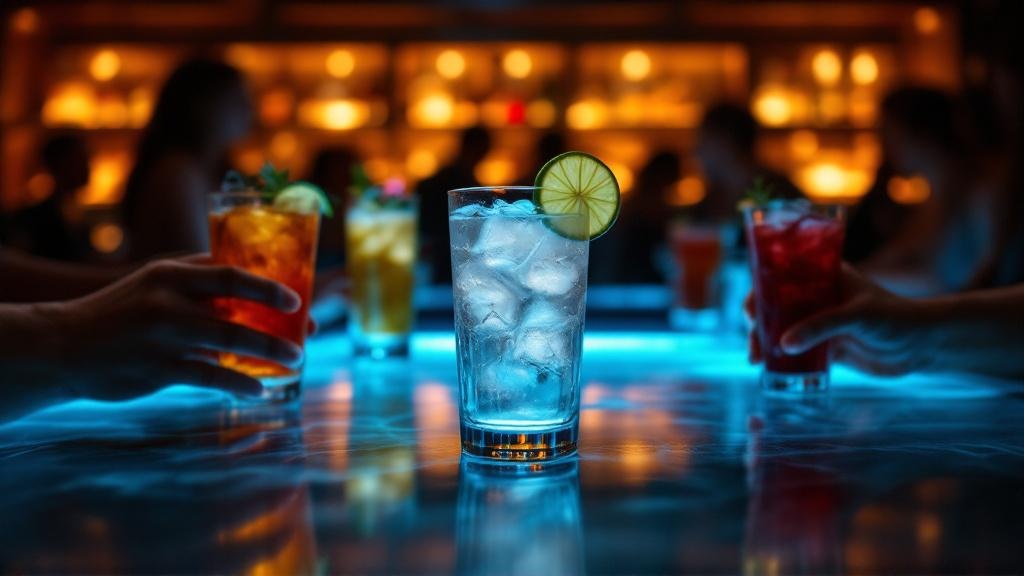
Sometimes the bravest move at an expensive bar is choosing the simplest drink and quietly sticking to your own limits.
Friend Friction
When Friends Do Not Get It
Sometimes you explain your budget, suggest alternatives, and set boundaries, and certain friends still push back. They may tease you for being “cheap,” insist on expensive bars, or act annoyed when you skip shots. That hurts, especially when you are already juggling money anxiety and alcohol pressure.
Start by separating a one-off comment from a pattern. Someone joking once might just be clumsy. But if a friend repeatedly embarrasses you about money or pressures you to break your limits, that is information. Healthy friendships respect social drinking on a budget once you state it clearly.
You can respond calmly with lines like:
- “I get that you love those nights, but they do not work for my budget right now.”
- “It is not about you paying; I am trying to change my own habits.”
- “I want to see you. Can we find something that works for both of us?”
If the answer keeps being “no,” it may be time to invest more in friendships that are not built almost entirely on expensive nights out. Many people find that shifting toward low-cost hangs reveals who is there for connection versus who is there for the performance.
Bigger Pattern
When Alcohol Feels Like More Than a Money Issue
It is very common to first notice something is off because of money, not mental health. Maybe your credit card balance keeps creeping up, or you dread checking your bank after weekends. But underneath, alcohol might be playing a bigger role in your anxiety or mood.
Drinkaware explains that alcohol can disrupt your fight-or-flight system and leave you more vulnerable to anxiety.[3] Cutting down can improve sleep, mood, and energy, which often eases money anxiety too, because you think more clearly. Everyday Health points out that as more people drink less, it is easier to find company in changing your habits.
If you notice that you:
- Often drink specifically to escape feelings about money.
- Struggle to stick to any limits you set, even when consequences feel serious.
- Feel your mental health is sliding, especially around drinking days and after.
Then talking to a doctor, therapist, or support group is a strong step. You do not need to hit a dramatic “rock bottom” before asking for help. You just need the sense that life could feel calmer than this.
How do I tell my friends I can’t afford to go out?
Keep it simple and honest. You can say, “I’m watching my budget more closely, and regular bar nights are too expensive for me right now.” Suggest an alternative, like coffee, a home dinner, or a walk. That keeps the focus on staying connected while practicing social drinking on a budget or choosing lower-cost plans.
How can I stay social if I cut back on drinking?
Shift the focus from “what are we drinking?” to “what are we doing?” Propose game nights, potlucks, coffee dates, free events, or daytime activities. You can still come to bars and stick to one drink or a soda, which fits social drinking on a budget without disappearing from the group entirely.
Is it okay to pretend to drink, like ordering soda with lime?
Yes. Many people order soda with lime or a non-alcoholic beer so they blend in more easily. This can support social drinking on a budget and help if you feel anxious about attention on your choices. Over time, you may feel more comfortable saying, “I’m just not drinking much lately,” but you do not owe anyone a full explanation.
What if my friends think I’m being cheap?
If you state your reasons once or twice and suggest other plans, you have done your part. Some people may project their own money anxiety and alcohol habits onto you. Keep reinforcing, “I want to see you, I just need to spend less and drink less.” Friends who value you will adjust or meet you halfway on social drinking on a budget.
How do I know if my drinking and money stress is becoming a problem?
Look for patterns: drinking more when stressed about money, breaking your own limits often, or needing alcohol to feel okay in social settings. If your finances, relationships, or mental health are suffering, it is worth talking with a health professional or support group. Changing your relationship with money anxiety and alcohol early is easier than waiting until things feel unmanageable.
Your Next Step
You Are Not Alone in Rethinking This
If Pretending Drinks Out Are Fun When You’re Anxious About Money feels like your life, there is nothing wrong with you. You are reacting to real pressures: high costs, intense social expectations, and a culture that treats alcohol as the default way to connect. Everyday Health reports, using Gallup data, that only about 54% of U.S. Adults now drink, and Dry January surveys from Ipsos and Penn State Extension show many people cut back partly to save money. You are moving with a wider tide, not against it.
Your next step can be small. Audit a month of spending, set a clear budget for social drinking on a budget, or text one friend with a cheaper plan for this weekend. If you use a cashback app like Oodlz when you buy groceries or snacks for nights in, you can stretch your dollars further and build a version of fun that supports your bank account instead of draining it. Over time, those choices give you more peace on both fronts: less pretending at the bar, and more genuine ease in your financial life.