Guides
Natural Drain Cleaner Methods That Actually Work
A slow or clogged drain is stressful, especially when water is rising and you picture a $200 plumber bill. You might already have everything you need in your kitchen to make a natural drain cleaner that helps. The key is knowing when simple methods are enough, and when a clog needs more than pantry ingredients. How to Unclog Drains at Home Using Simple Ingredients starts with understanding your specific situation.
Different drains clog for different reasons, from greasy kitchen pipes to hair‑filled shower traps. Some clogs respond well to a natural drain cleaner, while others need tools like a plunger or basic snake. Pushing the wrong method too far can damage PVC, worsen blockages, or mix badly with chemical products.
This guide walks through safe, step‑by‑step methods using hot water, dish soap, baking soda, vinegar, salt, and simple tools. You’ll see which natural drain cleaner works best for your clog type, how to handle standing water, when to stop trying DIY, and what calling a plumber might cost.
Table of Contents
- Understand Your Drain And Pipes
- Natural Drain Cleaner With Hot Water
- Baking Soda And Vinegar, Explained
- Baking Soda And Salt Method
- Natural Drain Cleaner Recipes Compared
- Simple Tools For Hair And Debris
- Standing Water And Special Situations
- Why Avoid Harsh Drain Chemicals
- When To Call A Plumber
- Prevent Clogs Naturally Long Term
- Frequently askedquestions.
- Bringing It All Together
- Sources
Key Takeaways
- Match the method to the drain and clog type: grease, hair, soap scum, or debris.
- A natural drain cleaner works best on mild to moderate clogs, not full backups.
- Baking soda and vinegar are helpful for slow drains and maintenance, not heavy blockages.
- Hot water, dish soap, and physical removal (plunger, basic snake) fix many home clogs cheaply.
- Know the red flags that mean it is time to call a plumber instead of forcing more DIY attempts.
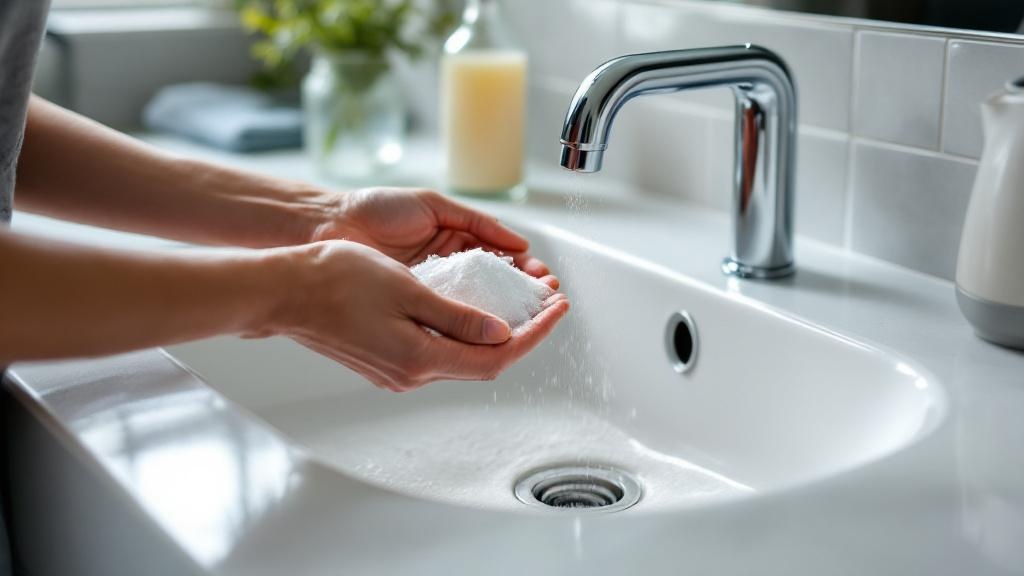
Simple pantry ingredients and a steady, methodical approach can turn a clogged sink from a stressful problem into a quick DIY fix.
Drain Basics
Understand Your Drain And Pipes
Before you choose a natural drain cleaner, identify what you are dealing with. Kitchen sinks usually clog from grease, fats, and food particles.[1] Bathroom sinks and showers mostly collect hair and soap scum. A.J. Perri lists hair, grease, food, small objects, and mineral buildup as some of the most common residential clog causes.
Next, look at your pipe material if possible. Older homes often use metal (galvanized steel or copper), while many newer homes use PVC. Metal pipes tolerate boiling water better than thin PVC, which prefers very hot, not rolling‑boil water, especially for repeated treatments.
Run this short pre‑check:
- Is the drain totally blocked or just slow?
- Is there standing water you cannot drain away?
- Have you already used a chemical drain cleaner?
If chemicals are in the pipe, skip any natural drain cleaner until the product has fully cleared, because mixing methods can create dangerous reactions or splashes.
Method Basics
Natural Drain Cleaner With Hot Water
For greasy kitchen drains or mild soap buildup, hot water with dish soap is the gentlest starting point. This method works because heat softens grease and the surfactants in dish soap help break it up.
Here is the basic process to clear a light clog:
- Remove as much standing water as you can with a cup or bowl.
- Squirt a generous line of dish soap directly into the drain.
- Heat a kettle or pot of water. For PVC pipes, aim for very hot, not constantly boiling.
- Slowly pour the hot water down the drain in two or three rounds.
- Wait a few minutes, then test with cold water.
This simple natural drain cleaner approach is best for fresh grease clogs, like after a heavy cooking day. If water still drains very slowly after two or three cycles, move to a different method instead of endlessly repeating hot water.
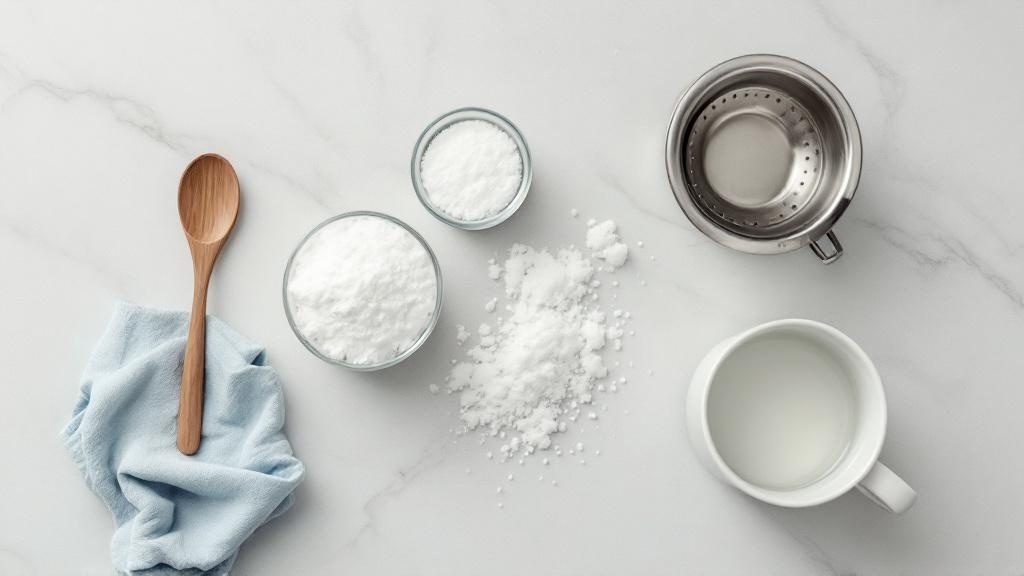
Common pantry staples become a calm, effective toolkit when you know how to combine them to gently clear household drains.
Baking Combo
Baking Soda And Vinegar, Explained
Baking soda and vinegar are the most famous natural drain cleaner pair, but they are often misunderstood.[2] According to The Spruce, this combo can help with small clogs and freshen drains, but it is not as strong as commercial products for heavy blockages.
To unclog a drain with baking soda and vinegar for a slow, not fully blocked pipe:
- Remove the drain stopper and any standing water.
- Pour 1/2 to 1 cup of dry baking soda into the drain.
- Add about 1 cup of white vinegar.
- Quickly cover the drain with a plug or cloth to keep the fizz down in the pipe.
- Wait 10–15 minutes while the reaction loosens grime.
- Flush with a full kettle of hot water (very hot if you have PVC).
The fizzing reaction can help loosen soap scum and light organic buildup on the pipe walls. It does not dissolve solid hair clumps, plastic, or large food chunks. Overpacking baking soda into a tight bend with too little liquid can create a paste, so keep amounts moderate.
Overnight Clean
Baking Soda And Salt Method
For drains that are slow but still moving, a baking soda and salt mix can act as a stronger natural drain cleaner without harsh chemicals. The combination is abrasive and alkaline, which helps break down residue along the pipe.
Use this overnight method when you can leave the drain alone for several hours:
- Start with a relatively dry drain (no standing water).
- Mix 1 cup baking soda with 1/2 cup table salt.
- Pour the dry mixture into the drain.
- Leave it for several hours or overnight to work on the buildup.
- In the morning, flush with very hot water for several minutes.
This approach is helpful after you physically remove hair from a bathroom sink or shower but want to deal with remaining soap scum and odors. It is also a good maintenance natural drain cleaner every month for often‑used bathroom drains.
“
The most effective natural drain cleaner is the one matched to your specific clog, not the flashiest recipe you see online.
Pantry Options
Natural Drain Cleaner Recipes Compared
Different ingredients shine for different problems. Here is a quick comparison of common natural drain cleaner options using household supplies:
| Method | Best For | Main Ingredients | Effort Level | When To Stop |
|---|---|---|---|---|
| Hot water + soap | Grease, light film | Dish soap, hot water | Low | After 3 rounds |
| Baking soda + vinegar | Slow, minor clogs | Baking soda, vinegar | Low‑medium | No change after 2 tries |
| Baking soda + salt overnight | Soap scum, odors | Baking soda, salt | Medium | Still slow next day |
| Plain salt + hot water | Light buildup | Salt, hot water | Low | If no improvement |
| Enzyme‑style store product | Organic buildup | Enzymes, bacteria | Medium | Repeated failure |
According to US EPA, many conventional cleaning products use surfactants that can degrade slowly and form more toxic compounds that harm aquatic life.[3] Choosing a homemade natural drain cleaner or an enzyme‑based option where possible supports more eco friendly drain cleaning and reduces harsh chemical exposure at home.
Tool Help
Simple Tools For Hair And Debris
No natural drain cleaner can magically dissolve a dense wad of hair or a bottle cap. Hair and solid debris usually need physical removal, especially in bathroom sinks and showers.
Start with the basics:
- Plunger:
- Fill the sink or tub until the rubber cup is fully covered.
- Block any overflow holes or the second bowl on a double sink with a wet cloth.
- Press down gently, then pull up sharply to draw the clog toward you rather than forcing it deeper.
- Repeat 10–20 times, then test the drain.
- DIY hair hook:
- Straighten a wire coat hanger and bend a small hook at one end.
- Carefully feed it into the drain and pull back hair clumps.
- Move slowly to avoid scratching visible metal.
For visible hair around stoppers, use tweezers or gloved fingers. Once you remove as much as you can, follow with a baking soda and salt or baking soda and vinegar flush as a finishing natural drain cleaner to clear residue.
Tough Cases
Standing Water And Special Situations
A home remedy for a clogged drain with standing water needs a slightly different approach. Dry ingredients like baking soda and salt cannot reach the blockage if water fills the pipe.
Try this sequence:
- Scoop out as much standing water as possible with a small container.
- Use a plunger first to see if you can shift the clog.
- If water starts to move but remains slow, follow with hot water and dish soap.
- When the water level drops, then consider a baking soda based natural drain cleaner.
For kitchen sinks with garbage disposals, always turn off the power and check the disposal chamber first. Sometimes a spoon, fruit label, or large scrap can jam the unit. Clear any visible obstruction safely and press the reset button before testing with water.
On double sinks, block the second drain tightly while plunging so pressure goes straight to the clog. For showers with ankle‑deep water, hair removal tools are your first step, then a baking‑based natural drain cleaner to deal with leftover grime and odor.
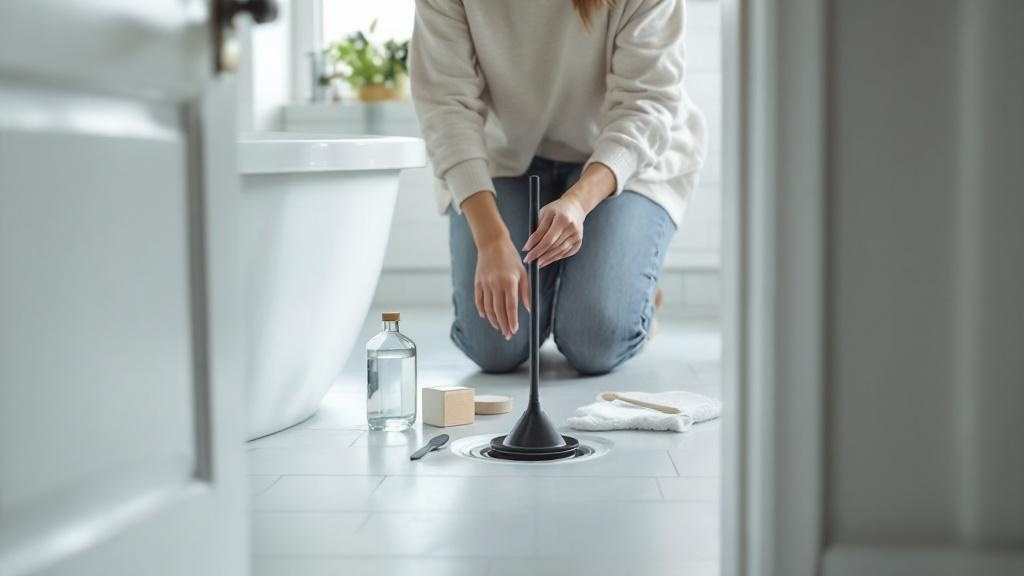
For tougher clogs, combining simple ingredients with basic tools like a plunger helps bridge the gap between light DIY and calling a professional.
Chemical Impact
Why Avoid Harsh Drain Chemicals
Many chemical drain cleaners rely on highly caustic ingredients like sodium hydroxide or strong acids.[4] Novelty Journals reports that such cleaning agents can irritate skin, eyes, and the respiratory system and contribute to water quality problems when they enter wastewater. These substances can corrode metal pipes and stress certain plastics over time.
US EPA notes that some conventional cleaning surfactants biodegrade slowly and can transform into more toxic compounds that threaten aquatic life. From a health and environmental perspective, it often makes sense to try an eco friendly drain cleaning approach first, such as a homemade natural drain cleaner or a bio‑enzymatic product designed for organic buildup.
If you use a chemical product at any point, never follow it immediately with vinegar, baking soda, or another homemade recipe. Wait until the chemical solution has fully drained away and the line is flushed with plenty of water to avoid dangerous reactions or splashes.
Call Or DIY
When To Call A Plumber
Natural methods, a plunger, and simple tools fix many clogs. Still, some situations call for a professional instead of another round of homemade natural drain cleaner.
Stop DIY and call a plumber when:
- Multiple fixtures back up at once, especially lower‑level drains.
- You smell strong sewage odors or hear gurgling in several drains.
- The same drain reclogs within days or weeks despite careful cleaning.
- Standing water does not improve after trying hot water, plunger, and at least one baking‑based method.
According to The Spruce, clearing a simple residential drain with professional snaking typically costs around $100–$275, with more stubborn clogs landing near $275.[5] That feels expensive, but solving an underlying issue once can be cheaper than repeated emergencies or hidden pipe damage from aggressive DIY attempts.
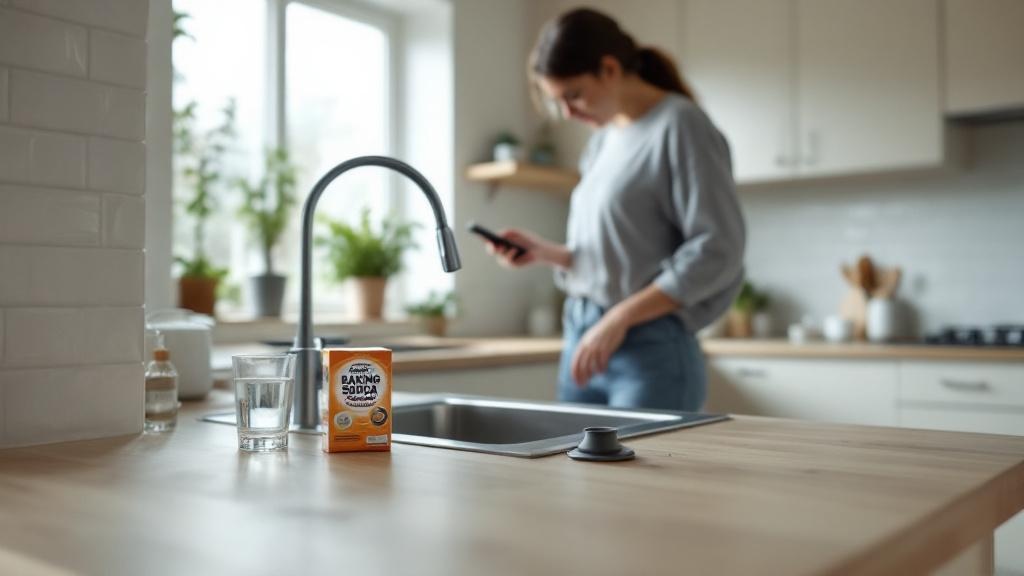
Knowing when to switch from gentle DIY methods to a professional visit protects your pipes, wallet, and peace of mind.
Drain Habits
Prevent Clogs Naturally Long Term
Prevention makes every natural drain cleaner more of a backup plan than a constant chore. The easiest step is to catch waste before it enters your pipes.
Adopt these habits:
- Use drain baskets or hair catchers in every sink, shower, and tub.
- Wipe grease from pans into the trash before rinsing, and never pour fats or coffee grounds down the kitchen sink. A.J. Perri highlights grease and food scraps as leading kitchen clog causes.
- Run very hot water for 20–30 seconds after washing greasy dishes.
- Do a light maintenance flush once a month with hot water and a small amount of baking soda and vinegar on slow‑draining fixtures.
US EPA guidance on greener cleaning products reminds us that what goes down household drains eventually reaches wider water systems. Choosing simple habits and a natural drain cleaner for light maintenance can protect both your plumbing and the environment.
What is the best homemade drain cleaner?
The best homemade drain cleaner depends on the clog. For greasy kitchen sinks, hot water and dish soap are often most effective. For slow bathroom drains with hair and soap scum, physical hair removal followed by a baking soda and salt or baking soda and vinegar natural drain cleaner works well.
How long does baking soda and vinegar take to unclog a drain?
Most people let baking soda and vinegar sit for 10–15 minutes before flushing with hot water. If you see no improvement after two full treatment cycles, this natural drain cleaner likely will not solve the problem and you should switch to tools like a plunger or basic snake.
Can baking soda and vinegar damage pipes?
Used in moderate amounts, baking soda and vinegar are generally safe for metal and PVC pipes. Problems arise when people pack too much dry baking soda into a tight bend without enough liquid, which can create a hard paste. Avoid using this natural drain cleaner directly on top of chemical products.
What is the safest way to unclog a drain with PVC pipes?
For PVC, start with very hot (not continually boiling) water and dish soap, plus gentle plunger use if needed. Then try a modest baking soda‑based natural drain cleaner for slow drains. Avoid frequent boiling water flushes and strong chemical drain cleaners, which can stress plastic over time.
Do natural methods work on hair clogs?
Natural methods alone rarely dissolve large hair clumps. The most reliable approach is to physically remove hair with a plunger, tweezers, or a simple hook tool, then use a baking soda and salt or baking soda and vinegar natural drain cleaner to loosen remaining soap scum and freshen the drain.
Is it safe to use natural methods after a chemical drain cleaner?
You should not mix a chemical product and a natural drain cleaner directly. Wait until the chemical cleaner has drained away, then flush the pipe thoroughly with water. Once the line is clear and flowing, you can consider gentle natural maintenance methods in the future instead of more chemicals.
Next Steps
Bringing It All Together
How to Unclog Drains at Home Using Simple Ingredients works best when you treat it like a decision tree, not a single magic recipe. Start with the mildest options, such as hot water and dish soap or a basic natural drain cleaner, and match each method to your clog type and pipe material. Use baking soda and vinegar or baking soda and salt mainly for slow drains and maintenance.
When clogs keep returning, affect several fixtures, or ignore careful DIY attempts, calling a plumber for a $100–$275 professional cleanout can protect your home and budget. Next time a drain slows, choose one method from this guide, follow the steps carefully, and keep chemical cleaners as a last resort for the toughest situations.