Travel
How Inflight Wi‑Fi Is Transforming Your Time In The Air
Remember when stepping on a plane meant disappearing from the online world for hours? Today, cabins feel more like flying living rooms, with inflight wi‑fi in‑flight wi‑fi connecting laptops, tablets, and phones at 35,000 feet. How Airline Wi-Fi is Changing the In-Flight Experience is now a real question for anyone who flies for work or leisure.
This shift affects more than checking email. Fast, reliable connections change how people choose airlines, handle workdays, entertain kids, and manage travel stress. At the same time, spotty coverage, different pricing models, and security risks mean the experience is far from simple.
This guide explains how the tech evolved, what you can realistically do online now, and how to prepare. You will see where wi‑fi is common, how pricing models work, what trade‑offs to expect, and how to stay secure so each flight matches your connectivity needs.
Table of Contents
- Why Airline Wi‑Fi Used To Be Awful
- How The New Connectivity Tech Works
- By The Numbers: Wi‑Fi In The Skies
- How inflight wi‑fi in‑flight wi‑fi Feels Now
- How Wi‑Fi Changes Cabin Atmosphere
- Free, Freemium, And Paid Wi‑Fi
- How Wi‑Fi Affects Flight Decisions
- Limits, Etiquette, And Security Risks
- Getting inflight wi‑fi in‑flight wi‑fi Right
- What Connected Flight Looks Like Next
- Frequently askedquestions.
- What Airline Wi‑Fi Means For You Now
- Sources
Key Takeaways
- Around 70% of airlines now offer some form of inflight wi‑fi in‑flight wi‑fi, but quality still varies by route and aircraft.
- Most passengers now see onboard connectivity as essential, and many choose flights partly based on wi‑fi quality.
- Freemium models dominate, with basic messaging free and full internet or streaming paid on many airlines.
- Smart prep—downloads, power, VPN, realistic expectations—makes wi‑fi‑heavy flights smoother and less stressful.
- Better connectivity improves productivity and entertainment, but raises etiquette, security, and “always on” wellbeing questions.
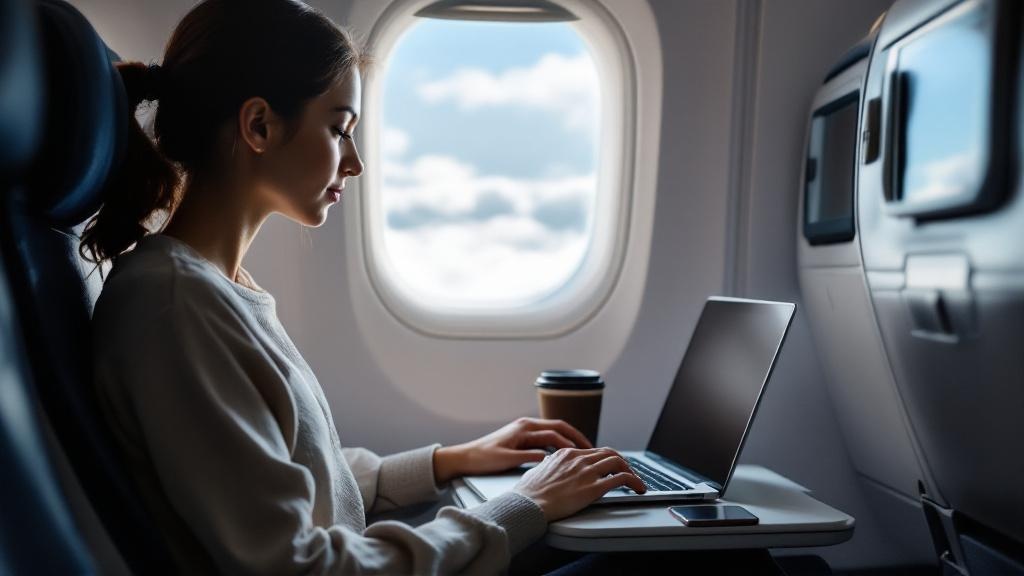
Modern inflight Wi‑Fi turns quiet cruising time into a comfortable blend of work and downtime, with personal devices and soft cabin light creating a living room in the sky.
Early Days
Why Airline Wi‑Fi Used To Be Awful
Early airline wi‑fi relied on air‑to‑ground networks that connected aircraft to towers on the ground. Think of it as a flying cell tower link built for basic browsing, not streaming or video calls. These systems struggled with capacity, so speeds collapsed when many passengers tried to connect at once.
Prices reflected the limitations. You might pay $20 for a long‑haul pass and still wait 30 seconds for a page to load. Frustration with slow or dropping connections was already high when only basic email and messaging were realistic.
Coverage was patchy too. Many systems worked mainly over certain regions, so wi‑fi cut out over oceans or less‑connected areas. For years, airline wi‑fi was a punchline: expensive, unreliable, and easy to skip in favor of an offline movie and some sleep. That reputation is fading, but memories linger, which is why many travelers still ask whether modern inflight wi‑fi in‑flight wi‑fi is worth buying.
Tech Shift
How The New Connectivity Tech Works
Modern inflight connectivity leans heavily on satellites rather than ground towers. Operators use high‑throughput satellites that divide coverage into many small beams, boosting total capacity. Panasonic Avionics explains that this shift lets airlines deliver speeds closer to what people expect on the ground, especially on newer aircraft with upgraded antennas.[1]
Another change is the move toward low Earth orbit constellations, such as Starlink, that orbit much closer to Earth. Shorter distances mean lower latency, so video calls and cloud apps feel more responsive. On some Starlink‑equipped routes, business travelers report working almost as if they were in an office, apart from occasional drops.
These systems are not perfect. Weather, satellite handoffs, and congested beams still cause slowdowns. Regional jets and older planes might lack updated hardware, which is why inflight wi‑fi in‑flight wi‑fi can feel great on one flight and painful on another, even with the same airline. But the baseline is far higher than a decade ago, especially on long‑haul and major business routes.
Behind every smooth onboard connection is a quiet network of satellites and skyward technology, turning cruising altitude into a digitally linked corridor.
Global Picture
By The Numbers: Wi‑Fi In The Skies
Summarized by Onboard Hospitality, seven out of ten airlines worldwide now offer onboard wi‑fi.[2] Adoption is highest among traditional carriers, with 89% of legacy airlines connected, while 57% of low‑cost carriers remain unconnected. So inflight wi‑fi in‑flight wi‑fi is common, but still not universal.
Passenger expectations raced ahead. Aircraft Interiors International reports, citing a Viasat 2024 survey, that 80% of passengers now consider inflight wi‑fi essential to their travel experience. Viasat’s 2024 75% of travelers are more likely to book flights with high‑quality wi‑fi, rising to 92% in markets like China.
Viasat data shows one in three passengers rank “no wi‑fi” among the most frustrating parts of flying today. Wi‑fi now outranks free snacks, drinks, and even traditional seatback entertainment for many people when choosing an airline. For frequent travelers, good inflight wi‑fi in‑flight wi‑fi is shifting from nice bonus to basic infrastructure.
Work And Play
How inflight wi‑fi in‑flight wi‑fi Feels Now
On many routes, modern inflight wi‑fi in‑flight wi‑fi supports full workdays in the air. You can handle email, cloud documents, chat tools, and sometimes video calls, especially on wide‑body aircraft with newer satellite systems. Many remote and hybrid workers treat long flights as focused work blocks rather than dead time.
Entertainment behavior changed just as much. Viasat research suggests about 62% of passengers use inflight connectivity mainly for entertainment, from social media and messaging to streaming.[3] On flights that allow it, you can watch Netflix, Disney+, or similar services, though lowering video quality to 480p often keeps streams stable when the network is busy.
Families benefit too. Parents can keep kids occupied with shows, games, and school apps, reducing mid‑flight meltdowns on long sectors. At the same time, some travelers use wi‑fi mostly to stay in touch—sharing live location, messaging nervous relatives, or coordinating pick‑ups. How Airline Wi-Fi is Changing the In-Flight Experience shows up here as less boredom, more choice, and far more personalization than the old single movie on a shared screen.
“
The best way to judge inflight wi‑fi in‑flight wi‑fi is not by the marketing promise but by what you actually need it to do on that specific flight.
Experience Shift
How Wi‑Fi Changes Cabin Atmosphere
Cabins feel different when almost everyone is connected. Instead of books and magazines, you see glowing screens, noise‑canceling headphones, and people typing. Business travelers run meetings from row 23, students stream lectures, and families share tablets between siblings. Inflight connectivity turns “in‑between” time into something more productive or more personalized.
This has psychological upsides and downsides. Constant connection can reduce anxiety for people who worry about missing urgent messages or travel updates. But it also removes the built‑in break many travelers once valued. Some feel pressure to remain reachable to bosses or clients simply because inflight wi‑fi in‑flight wi‑fi exists, especially on work trips.
Cabin etiquette is still evolving. Many airlines forbid regular voice calls, but some allow limited app calling, which can annoy nearby passengers. Notifications, bright screens, and occasional video calls change the sound and light in the cabin. For some, this feels modern and convenient. For others, it erodes the quiet, disconnected nature of flying.
Money Models
Free, Freemium, And Paid Wi‑Fi
Pricing is one of the most confusing parts of inflight connectivity. Onboard Hospitality’s coverage of Moment’s only about 13% of airlines offer fully free wi‑fi today. At the other end, some carriers still sell only paid passes for a set time or data amount.
The most common approach is freemium. About 58% of connected airlines use models where basic messaging is free, while full internet or streaming needs a paid plan. Some pair this with loyalty programs—for example, free wi‑fi if you join a frequent‑flyer scheme or log in through an airline account.[4] Viasat’s 2024 Passenger Experience Survey found that 87% of travelers would watch ads in exchange for free access, a trend likely to shape future pricing.
Here is a simple way to think about the three main models you will see:
| Model Type | What You Get Free | What You Pay For | Best For | Main Trade‑Off |
|---|---|---|---|---|
| Free Wi‑Fi | Full browsing | Nothing extra | Casual use | Often slower |
| Freemium | Messaging only | Browsing, streaming | Most travelers | Upsell pressure |
| Fully Paid | Nothing | All access | Power users | Higher total cost |
Knowing which model your flight uses helps you decide whether to rely on inflight wi‑fi in‑flight wi‑fi or treat it as a backup.
Choice Factor
How Wi‑Fi Affects Flight Decisions
For many travelers, wi‑fi is now a key factor when choosing flights. Viasat’s 2024 survey, cited by Skift, shows that wi‑fi ranks ahead of free food, drink, and even legroom for a significant share of passengers. When inflight wi‑fi in‑flight wi‑fi quality is poor or absent, repeat bookings suffer.
If you travel for business, it often makes sense to prioritize airlines and routes with strong connectivity records, even at a slightly higher fare. Long daytime flights where you plan to work or coordinate with a team benefit most from good wi‑fi. On short hops or overnight red‑eyes, you might accept weaker connectivity in exchange for schedule or price.
Before booking, check: Does the airline advertise wi‑fi on your specific route? What aircraft usually flies it, and does that model typically carry updated systems? Some carriers publish coverage maps and speed expectations by region. A few extra minutes of research can spare you from paying for inflight wi‑fi in‑flight wi‑fi that cannot support what you planned to do.
Flip Side
Limits, Etiquette, And Security Risks
Even on well‑equipped jets, inflight wi‑fi in‑flight wi‑fi has limits. When many passengers stream video during peak times, speeds drop. Regional jets or older planes may have partial coverage or none at all. Weather or satellite handoffs can cause short outages, which are annoying if you rely on cloud apps without offline backups.
Etiquette is another concern. Most airlines still ban standard voice calls to keep cabins relatively quiet, but app‑based calls, loud videos without headphones, or bright screens at night can annoy neighbors. A good rule is to behave as you would in a quiet shared office: headphones on, volume low, and minimal on‑camera calls unless absolutely necessary.
Security deserves special attention. Inflight networks are usually public and sometimes unencrypted. Cybersecurity experts warn about risks such as man‑in‑the‑middle attacks or fake hotspots mimicking airline networks. Treat inflight wi‑fi in‑flight wi‑fi like any public café network: avoid online banking, use a reputable VPN, and stick to HTTPS websites whenever possible.

Before boarding, travelers quietly decide how connected they’ll be—choosing devices, power, and plans that shape work, play, and streaming time in the air.
Smart Planning
Getting inflight wi‑fi in‑flight wi‑fi Right
You can prepare for a wi‑fi‑reliant flight in about ten minutes. This small investment drastically reduces stress if the network underperforms. Here is a fast checklist that works for most trips:
- Check your flight
- Confirm whether your airline lists wi‑fi on that route and aircraft type.
- If it does, note whether the model is known for decent speeds.
- Decide what you truly need
- Messaging only, full workday, or streaming?
- Match expectations to likely performance; assume less on older aircraft.
- Download essentials offline
- Save key documents, presentations, and boarding passes locally.
- Download playlists, podcasts, and shows in your streaming apps.
- Prep your devices
- Charge fully and pack cables plus a power bank.
- Turn on offline modes in apps like Google Docs or cloud storage.
- Connect smartly on board
- Log on early before everyone starts streaming.
- Drop streaming quality, avoid huge uploads, and close background apps.
Handled this way, inflight wi‑fi in‑flight wi‑fi becomes a helpful extra, not a single point of failure.
Future View
What Connected Flight Looks Like Next
Panasonic Avionics describes a future with even higher‑capacity satellites and more aircraft equipped worldwide. Moment reports that very high throughput satellites can support hundreds of megabits per second to planes, enough to support heavier use per passenger. As costs fall, more airlines look at making inflight wi‑fi in‑flight wi‑fi free, funded by ads or loyalty programs.
Expect more personalized experiences too. Airlines experiment with platforms that tie your frequent‑flyer profile to both seatback screens and personal devices. You might see tailored recommendations for destination activities, targeted offers, or synced playlists that follow you from lounge to seat.
Cabins may feel more like connected lounges than isolated tubes. That raises new questions about digital wellbeing, screen fatigue, and how much connection travelers really want. How Airline Wi-Fi is Changing the In-Flight Experience over the next decade will depend as much on passenger preferences and etiquette as on satellite technology.
Is airplane Wi‑Fi fast enough for Zoom calls?
On newer satellite systems, yes, short Zoom or Teams calls often work. Latency is higher than on the ground, so expect small delays, and audio‑only is usually more reliable than video. Always have a backup plan, such as dial‑in numbers or catching up by email if inflight wi‑fi in‑flight wi‑fi slows down.
Do all airlines offer inflight Wi‑Fi now?
No. Moment’s IFC Benchmark, highlighted by Onboard Hospitality, says about 70% of airlines offer some connectivity. Legacy carriers lead, while many low‑cost and regional airlines still lack wi‑fi on parts of their fleets. Always check your specific route and aircraft, because inflight wi‑fi in‑flight wi‑fi availability is not guaranteed.
Is inflight Wi‑Fi usually free?
Only around 13% of airlines offer fully free wi‑fi. Most use freemium models with free messaging and paid full access, or time‑based paid passes. Some airlines offer free inflight wi‑fi in‑flight wi‑fi for loyalty members, so joining a frequent‑flyer program can help.
How secure is airline Wi‑Fi?
Airline networks are public and sometimes unencrypted, similar to hotel or café wi‑fi. That means hackers could try to intercept traffic or create fake hotspots. Use a reputable VPN, avoid banking or sensitive logins, and verify you connect to the official network to reduce inflight wi‑fi in‑flight wi‑fi security risks.
Why is Wi‑Fi better on some flights than others?
Performance depends on satellite provider, aircraft hardware, coverage region, and how many people are online. Wide‑body jets on busy business routes usually get upgraded systems first, while smaller regional planes may lag. Weather, routing, and time of day also affect how your inflight wi‑fi in‑flight wi‑fi feels.
Can I stream Netflix or similar services on a plane?
On many long‑haul routes you can, especially with modern high‑throughput satellite systems. Some airlines explicitly allow streaming, while others restrict bandwidth. For best results, lower playback quality, download a few episodes offline as backup, and remember that inflight wi‑fi in‑flight wi‑fi still slows down when many people stream at once.
Your Next Trip
What Airline Wi‑Fi Means For You Now
Airline connectivity has moved from novelty to expectation. Modern systems, new satellites, and smarter pricing mean you can usually count on inflight wi‑fi in‑flight wi‑fi for messaging, browsing, and often streaming or light video calls, especially on major carriers and long‑haul routes. At the same time, coverage gaps, congestion, and security risks remain part of the picture.
Treat wi‑fi as one factor alongside schedule, price, and comfort when you book. Check which flights actually support the tasks you care about, bring power and offline backups, and use basic security habits on every public network. How Airline Wi-Fi is Changing the In-Flight Experience for you personally comes down to planning: know what the connection can handle, decide how connected you want to be, and pick the flights that match your style.
If you also stack smart travel rewards and cashback tools like Oodlz with the right flights, you can stay connected and still keep your total trip costs under control. And as more airlines shift to freemium and free models, watching those wi‑fi details could save you real money over a year of flying.