Business
Best Small Business Ideas Small Town Guide 21 Picks
Starting a business in a town of 3,000 people can feel riskier than launching in a big city. Fewer customers, fewer employers, and everyone knows everyone. Yet small towns are where many of the 33.2 million U.S. small businesses live, roughly one for every ten people, according to Tailor Brands.
This guide covers the Best Small Business Ideas for Starting Out in a Small Town and, more importantly, how to choose one that fits your life. You’ll get a simple framework based on your budget, skills, and town type, plus realistic startup costs and validation steps. By the end, you’ll have a shortlist of small town business ideas you can test in the real world, not just scroll past online.
Table of Contents
- Why Small-Town Business Can Work
- Understand Your Small Town
- Know Your Budget And Skills
- Service Businesses You Can Start
- Brick-and-Mortar Staples That Work
- Online And Hybrid Business Options
- Ideas By Small-Town Type
- Test Your Idea Before Committing
- First Steps To Open For Real
- Frequently askedquestions.
- From Ideas To Your First Customer
Key Takeaways
- The best small town business ideas depend on your town type, budget, skills, and lifestyle goals.
- Service-based ideas often need under $2,000 and can bring in revenue within weeks.
- Brick-and-mortar staples cost more but can anchor a town if you find a real gap.
- Simple validation steps with locals reduce risk before you sign a lease or buy equipment.
- A one-page plan and basic marketing are enough to launch your first version.

That first quiet morning at the kitchen table—when a vague dream of owning a small-town business starts to feel like something real you could actually build.
Why Here
Why Small-Town Business Can Work
Small towns look risky, but the numbers say something different. According to SBECouncil, small firms make up 99.7% of U.S. employer businesses, and those with fewer than 20 employees are 89% of all employer firms. Many of those are exactly the kind of small town business ideas you’re considering.
Rural communities are also changing. Bask Health reports that 59% of rural areas that lost people between 2010 and 2019 started growing again from 2019 to 2021, largely because remote workers moved in. Those new residents need coffee, childcare, gyms, and local services.
You also have the “local multiplier” on your side. Bask Health notes that every 100 spent at a locally owned business keeps about 50 circulating locally, compared with around 15 for national chains. That means town leaders and residents often actively want you to succeed.
The real question is not whether small towns can support businesses. The question is which small town business ideas fit your town and your situation. That’s where a simple framework beats a random list.
Step 1
Understand Your Small Town
Before you pick any idea, profile your town. The Small Business Administration advises starting with your niche and target customer, not your favorite concept. In a small town, your “niche” often comes from what is missing.
Quick town-type checklist
Most small towns fit one or more of these archetypes:
- Farming / rural hub
- Tourism / natural attractions
- Bedroom or commuter town
- College town
- Retirement / aging population
You probably see your town in at least one category. This matters because the most profitable small town business ideas in a farm hub may flop in a retiree town.
How to assess your town in 5 steps
- Check population and trend. Is the population growing, stable, or shrinking? Ask city hall or look at census summaries.
- List major employers. Farming, factories, hospital, school, prison, or mostly remote workers?
- Walk the main streets. Note what’s already there: food, fitness, childcare, auto, health, etc.
- Write down obvious gaps. What do people drive 20–40 miles away for? Decent coffee, a gym, pet grooming, hardware?
- Listen to complaints. In Facebook groups, at ball games, and at church: “Why don’t we have X?” Those complaints are idea seeds.
“
The best small town business ideas usually come from what your neighbors already complain about, not from a random online list.
Simple archetype chart
Think about which box your town checks first:
- Farming hub: Grain elevators, equipment dealers, feed stores, and lots of pickups.
- Tourism town: Seasonal crowds, short-term rentals, downtown shops that open late.
- Bedroom town: Many commuters, busy mornings and evenings, quiet midday.
- College town: Students, nightlife, cheap eats, constant turnover.
- Retirement town: Medical clinics, pharmacies, quiet evenings, interest in services at home.
Circle one or two. You’ll use this when matching small town business ideas later.
Step 2
Know Your Budget And Skills
Next, you need an honest picture of what you can start now. Many beginners overestimate what they can borrow and underestimate how much time a business takes.
Budget bands that shape your options
Think in three simple bands:
- 0–2,000: Service-heavy, equipment-light ideas. Examples: lawn care, cleaning, tutoring, online freelancing.
- 2,000–10,000: Mobile services, small home-based shops, basic food concepts, simple online stores.
- 10,000+: Brick-and-mortar locations, specialized equipment, build-outs for food or fitness.
If you have less than $2,000, focus on service-based small town business ideas that mostly use tools you already own or can buy cheaply.
Simple self-assessment questions
Answer these seven questions on paper:
- Do you prefer working with your hands, with people, or on a computer?
- Are you comfortable selling and talking to strangers?
- How many hours per week can you realistically commit for the next 12 months?
- Do you want to work days, evenings, or flexible hours?
- Are you willing to deal with health, food, or childcare regulations?
- Do you already own helpful assets like a truck, tools, spare room, or barn?
- Would you rather grow slowly with your own cash, or are you open to loans and investors?
Match your answers with categories:
- Hands-on + outdoor + low budget → home and property services.
- People-focused + evenings/weekends → hospitality, childcare, fitness.
- Computer-based + flexible hours → online services, content, e-commerce.
Keep this page. You’ll compare it with specific small town business ideas shortly.
“If you are X, consider Y” shortcuts
Use these quick filters:
- You have under $2,000 and like outdoor work: Lawn care, snow removal, junk hauling, pressure washing.
- You have a spare room at home and love kids: Licensed home daycare, after-school homework club.
- You own a reliable pickup and basic tools: Handyman services, delivery service, small moving jobs.
- You are comfortable online and writing or design: Social media management, website design for local businesses, online tutoring.
Low-Cost
Service Businesses You Can Start
Reddit threads about rural entrepreneurship often share the same advice: start with service-based small town business ideas that solve obvious problems and cost almost nothing to launch. These ideas usually bring in revenue fastest.
Home and property services
These work well in bedroom communities, farming hubs, and retirement towns:
- Lawn care and gardening: Startup: $500–$2,000 for mower, trimmer, trailer, flyers. Clients: homeowners, landlords, small businesses. Recurring revenue: weekly or biweekly cuts.
- House cleaning: Startup: under $500 for supplies and marketing. Clients: busy families, elderly residents, local offices. Recurring revenue: weekly or monthly cleans.
- Handyman / home repairs: Startup: $500–$3,000 if you already own tools. Clients: homeowners, rental owners, farms. Recurring revenue: ongoing projects and seasonal work.
- Junk hauling: Startup: $1,000–$4,000 if you have a truck and pay for dump fees. Clients: moving families, estates, small contractors.
These small town business ideas tap into ongoing needs instead of one-off sales.
People and care services
In many small towns, there is more demand than supply for care services.
- Home daycare: Startup: $1,000–$5,000 for safety upgrades, toys, licensing. Works best in bedroom or commuter towns. Recurring revenue: monthly tuition from a handful of families.
- Elder care and errands: Startup: under $1,000 for insurance and marketing. You help with shopping, appointments, light chores. Strong fit for retirement towns.
- Tutoring and test prep: Startup: under $500 for materials and basic advertising. Ideal in bedroom or college-adjacent towns. Works in person or online.
- Pet sitting and dog walking: Startup: under $500. Works wherever people travel or commute long hours.
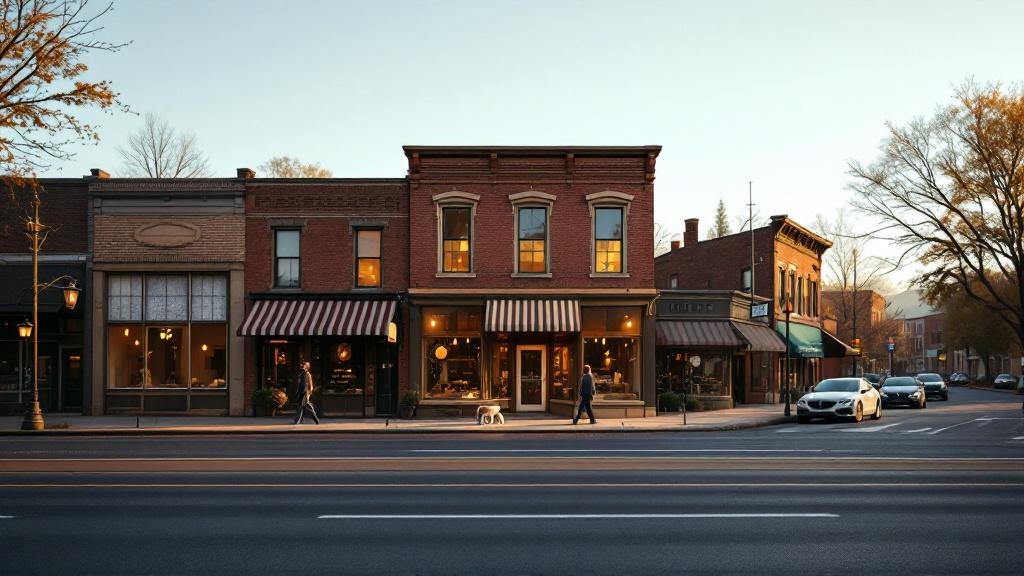
A quiet main street at sunrise, with one empty storefront waiting to become the next essential small-town business in the community.
Mobile and on-demand ideas
If you have a vehicle, mobile services can be some of the best low-cost small town business ideas.
- Mobile car detailing: Startup: $1,000–$3,000 for a pressure washer, vacuums, chemicals. You go to homes or offices.
- Mobile pet grooming: Startup: $5,000–$20,000 if you outfit a van, or much less if you work in clients’ homes.
- Mobile hair or barber services: Startup: $1,000–$3,000 if you are already licensed. You visit clients at home or set up in community spaces.
- Local delivery and errands: Startup: under $1,000. You deliver groceries, prescriptions, takeout, or online orders for residents who do not want to drive.
These service-based small town business ideas often reach profitability faster because fixed costs stay low.
Essentials
Brick-and-Mortar Staples That Work
At some point, every town needs certain physical places: somewhere to buy basics, eat with friends, or work out. NerdWallet and Lightspeed both highlight that “boring” staples like laundromats, hardware stores, and general stores often outperform trendier concepts in small communities.
Everyday essentials
Consider these if your town currently lacks them within 15–20 miles:
- General store or mini-grocery: Startup: often $50,000+ for inventory, fridges, and shelving. Works in rural hubs and tourism towns. Differentiate with local products and long hours.
- Hardware or feed and garden store: Startup: tens of thousands for stock and shelving. In a farm community with one feed store 30 miles away, this can become a core business.
- Laundromat: Startup: high, often $100,000+ for machines and plumbing. Works in towns with renters, seasonal workers, or older housing without washers.
Because fixed costs are high, you must validate demand carefully before choosing these small town business ideas.
Food and drink hubs
Toast and Lightspeed both show that small-town diners and cafés succeed when they become community “third places.”
- Diner or breakfast café: Startup: $50,000–$150,000 depending on build-out and equipment. Best in towns on commuter routes or highways.
- Coffee shop with co-working: Startup: similar range, but you can begin small with a kiosk or coffee trailer. Great for towns gaining remote workers.
- Bakery with local ingredients: Startup: $20,000–$80,000. You can start from a licensed home kitchen under cottage food laws, then move to a storefront.
- Ice cream shop or seasonal stand: Startup: $10,000–$50,000. Strong in tourism and lake towns.
More than a third of global consumers will pay extra for eco-friendly products, according to Lightspeed, which supports farm-to-table and sustainable spins on these small town business ideas.
Personal services
These are classic profitable small town business ideas when you see clear gaps:
- Salon or barbershop: Startup: $20,000–$80,000 depending on size and finish. Works anywhere with limited existing options or long waits.
- Nail spa: Startup: similar to a small salon, with strong demand among commuters and students.
- Gym or fitness studio: Startup: from $20,000 for a basic space to $200,000+ for a fully equipped gym. In a town of 3,000 with no gym but a busy walking trail, a small 24/7 key-card gym can do well.
Health and wellness sales are growing around 6.4% per year, and performance products even faster, according to Bask Health. That trend supports fitness, wellness shops, and health-food cafés in the right small towns.

From rough notes to real numbers, turning a list of small-town business ideas into a short, focused plan you can actually act on.
Online Work
Online And Hybrid Business Options
Remote work has changed what is possible from a small town. ZenBusiness highlights how many digital services now work from anywhere with good internet. These small town business ideas often start from home and scale with demand.
Freelance and digital services
You can sell skills to both local and global clients:
- Web design and maintenance: Build simple sites for local businesses that still rely on Facebook alone.
- Social media management: Run Facebook, Instagram, and TikTok for local shops, restaurants, and events.
- Virtual assistant services: Support entrepreneurs and remote workers with admin tasks.
- Online tutoring: Teach math, reading, language, or test prep via video calls.
These are strong home-based business ideas for rural areas when you prefer computer work and flexible hours.
Content and creator businesses
Content can be a longer path but fits well with rural life.
- Blogging about small-town living or homesteading with ad revenue and affiliate income.
- YouTube channel covering farm projects, DIY repairs, or rural cooking.
- Podcast about local history, business stories, or regional issues.
You can pair these small town business ideas with physical products, workshops, or tours later.
E-commerce and handmade products
Some small town entrepreneurs use a “local plus online” model:
- Sell handmade goods (woodworking, crafts, candles, soaps) on Etsy and at local markets.
- Create local-brand merch for your town: shirts, hats, mugs featuring inside jokes or landmarks.
- Package local food products (sauces, jams, spice mixes) under cottage food rules, then expand.
Many of the best small business ideas for rural areas combine e-commerce with in-person pop-ups, giving you both reach and loyal local fans.
Town Match
Ideas By Small-Town Type
Here is where your town profile and self-assessment come together. Instead of asking “What’s the most profitable idea?” ask “What business fits this town and my life?”
Farming and rural hubs
Strong fits include:
- Feed and garden store
- Equipment repair or welding
- Landscaping, tree service, snow removal
- Farm stand, U-pick, or CSA boxes
TrinaJulian and Bask Health both point out that rural entrepreneurship often succeeds when it supports the agricultural base directly.
Tourism and natural-attraction towns
If you see seasonal traffic:
- Bed-and-breakfast or cabin rentals
- Event barn or rustic wedding venue
- Guided hikes, fishing tours, or history walks
- Artisan market, gift shop, or local product store
These small town business ideas work best when they extend the visitor’s stay or increase local spending.
Bedroom or commuter towns
When many residents drive to a nearby city for work:
- Childcare and after-school programs
- Gym or fitness studio
- Coffee shop with quick breakfast and evening co-working
- Meal prep or freezer-meal business
- Mobile services: car detailing, pet care, home cleaning
Busy commuters pay for anything that buys back time.
Retirement and aging-population towns
For older residents:
- In-home elder care and companionship services
- Transportation to appointments and shopping
- Pharmacy and wellness shop
- Telehealth support office or mobile clinics partnership
These are some of the best small business ideas for rural areas with aging populations because they meet critical daily needs.
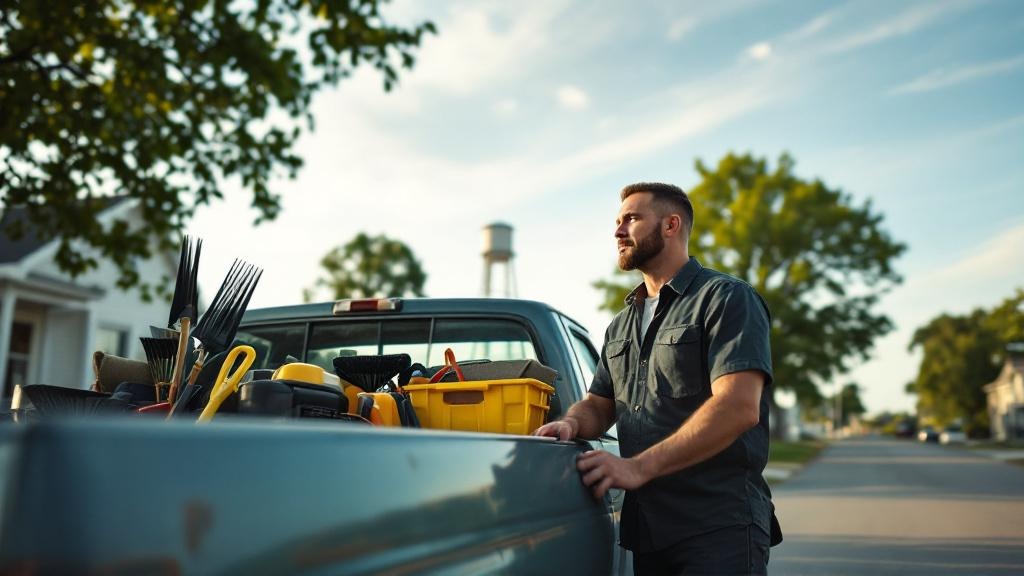
Starting small with a truck, a few tools, and a clear service—often the most realistic path into small-town entrepreneurship for beginners.
Validation
Test Your Idea Before Committing
This is where many idea lists stop and where your risk actually drops. Instead of jumping straight into a lease or loan, you validate one or two small town business ideas with real people.
Talk to 10–20 locals
Reddit entrepreneurs in small towns often say some version of “Talk to your neighbors before spending money.” Use simple questions:
- “What do you wish our town had that it does not have now?”
- “When you drive to [nearest city], what are you usually going for?”
- “If someone opened [your idea] here, would you use it? How often?”
Take notes. If people light up about your idea and offer to be “first in line,” that is a good sign.
Observe and count
Spend a weekend doing simple fieldwork:
- Count cars and people around potential locations at different times of day.
- Visit similar businesses in neighboring towns and see how busy they are.
- Track current options: How long is the wait at the closest gym, salon, or daycare?
Run a small pilot offer
Before you invest heavily:
- Offer a limited pre-sale: “First 10 lawn care clients at 25% off for the season if you book now.”
- Do a pop-up stand for baked goods, coffee, or crafts at the farmer’s market.
- Host a one-day event: fitness bootcamp in the park, pet photo day, or holiday mini-market.
If nobody responds after real effort, you may need to adjust or pick different small town business ideas.
Quick financial sanity check
Do back-of-the-envelope math:
- Decide how much you need to pay yourself monthly (for example, $3,000).
- Estimate realistic pricing (like $40 per lawn cut or $300 per daycare spot).
- Calculate how many customers you need and whether that number seems realistic for your town.
This step often reveals whether the Best Small Business Ideas for Starting Out in a Small Town are truly viable in your specific community.
Launch Plan
First Steps To Open For Real
Once you have one validated idea, keep your launch simple. You do not need a 40-page business plan to start.
Write a one-page plan
Cover just five things:
- What you sell (clear, simple description).
- Who you serve (your main customer type).
- How you will reach them (word-of-mouth, Facebook, flyers, partnerships).
- Rough numbers (startup costs, monthly expenses, revenue targets).
- First 90-day goals (clients, sales, reviews).
This one pager keeps your small town business ideas grounded in reality.
Check legal and regulatory basics
Depending on your idea:
- Register your business name and basic structure (sole proprietor, LLC, etc.).
- Check zoning rules for home-based or storefront businesses.
- Review health, food, childcare, or professional licensing requirements.
- Confirm insurance needs: liability, vehicle, property, or professional coverage.
The Small Business Administration offers simple checklists for choosing a structure and understanding permits.
Funding options for small-town entrepreneurs
If savings are not enough, consider:
- Microloans or small personal loans from local banks and credit unions.
- SBA-backed loans with longer terms for equipment or property.
- USDA rural development programs that target rural entrepreneurship.
- Small community development funds or local investors, especially for town businesses every community needs, like childcare or grocery options.
Simple marketing that works locally
In small towns, trust beats fancy branding:
- Create a Google Business Profile and a basic Facebook page.
- Share clear before-and-after photos or customer stories (with permission).
- Use flyers and business cards at churches, schools, and local events.
- Partner with existing businesses: the salon that recommends your daycare, the hardware store that refers your handyman work.
These low-cost steps can launch many small town business ideas within weeks, not years.
What is the most profitable small-town business?
There is no single winner. Profit depends on demand, competition, pricing, and your execution. That said, many of the most profitable small town business ideas are “boring” essentials: auto repair, trades, childcare, elder care, feed stores, and property services. They solve ongoing problems rather than trends.
Can I start a small-town business with no money?
You can start with very little, but not truly zero. Focus on service-based small town business ideas that use assets you already have, like a truck, tools, or a spare room. Keep early spending under $1,000 for basics like insurance, simple equipment, and marketing. Test demand before you consider loans.
What if my town is declining or very small?
If the population is shrinking, keep fixed costs low. Focus on flexible services (cleaning, repairs, delivery, online work) instead of large leases. You can also combine local work with online or regional clients, mixing small town business ideas from home with travel or digital services.
Should I choose a "cool" idea or a boring necessity?
For small towns, necessities usually win. Reddit discussions and sources like NerdWallet and Bask Health echo the same theme: consistent, needed services beat trendy concepts most of the time. If you want to try more creative or unique small town business ideas, pair them with a solid, recurring-revenue service.
How long before a small-town business makes a profit?
Low-cost service businesses can cover expenses within a few months if you secure steady clients. High-investment brick-and-mortar ideas may take one to three years to fully pay back startup costs. Your small one-page plan and validation steps will give you realistic timelines before you commit.
Are small-town businesses really worth it?
Yes, for many people. SBECouncil data shows small firms dominate U.S. employment, and Tailor Brands counts 33.2 million small businesses nationwide. In a small town, you can become the go-to choice faster, build loyal relationships, and create work that fits your life instead of commuting.
Your Next Step
From Ideas To Your First Customer
Small towns can be some of the best places to start a business if you match the idea to your town and your reality. You have seen how to profile your community, assess your budget and skills, and use simple validation steps instead of guessing. From there, you can pick two or three of the Best Small Business Ideas for Starting Out in a Small Town and test them with real neighbors.
Turn that short list into a one-page plan, set a 90-day goal, and launch the smallest version you can. As your business grows and your cash flow stabilizes, tools like Oodlz can help you stretch every supply purchase further through cashback rewards. Use that extra savings to upgrade equipment, refine your space, or test a second idea that builds on your first success.